At-Home Training
Footwork, reactions, and strength for young tennis players. Simple drills, diagrams and weekly plans for the backyard, driveway or garage.
Safety · Ladder · Cones · Hurdles · Reaction ball · Jump rope · Bands · Rebounder · Weekly plan · Gear
Topspin Trainer how-to
Set up a TopspinPro or TopSpin Solution step by step, then try five simple drills with drawings for every step.
Open the Topspin Trainer guideSafety first (read before every session)
- An adult watches every session, especially for ages 4–7.
- Use flat, dry, open ground such as grass, a garage floor, or a driveway, with no furniture, steps, or cars nearby.
- Wear sneakers, not socks or sandals.
- Warm up for 2–3 minutes first: march, skip, arm circles.
- Quality beats speed. Stop when form gets sloppy or your child is tired. End while it’s still fun.
- Water break every 5–7 minutes. If anything hurts, stop.
1. Agility ladder
Teaches quick, light feet and rhythm, the small steps kids use to get set before a shot.
One foot in each box (ages 4+)
Walk it first, then jog. Say “light feet, quiet feet.”
Two feet in each box (ages 5+)
Both feet land in every box. Arms move like running.
Side shuffle (ages 7+)
Stand sideways and step “in-in, out-out” down the ladder, the same move as a side step to a wide ball. Do both directions.
Ages 4–7: lay the ladder flat on grass and walk it before running. Tip: a chalk ladder on the driveway works as a starter.
Gear: SKLZ Quick Ladder
2. Cones (tall agility cones and flat disc cones)
Teaches moving to a spot and recovering to the middle.
Cone touch and back
Set 3 cones in a fan about 3 big steps from a middle disc. A parent calls a color, the child shuffles out, touches the cone, and comes back to the middle. That’s tennis recovery.
Zig-zag run
Set 5–6 cones in a zig-zag. Run through with small steps at each turn.
Shadow swing stations (ages 6+)
At each cone, do a slow shadow forehand or backhand (no ball), then move to the next cone.
Gear: ZEAYEA 9″ cones · disc cones
3. Mini hurdles (6-inch)
Teaches knee lift, balance, and springy steps.
Step-overs (ages 4+)
Walk over each hurdle, lifting the knees high. No jumping yet.
Two-foot hops (ages 6+)
Space hurdles about one big step apart. Hop over with soft landings and bent knees.
Side step-overs (ages 8+)
Step sideways over each hurdle, leading with one foot, then switch sides.
Hurdles bend if a child steps on them, so missing one isn’t scary. Keep hops small. These are for rhythm, not height.
Gear: SKLZ 6-inch hurdles
4. Reaction ball
Teaches quick reactions and watching the ball closely.
Drop and catch (ages 5+)
The parent drops the ball from waist height and the child catches it after one bounce. Use two hands at first.
Ready position catch (ages 7+)
The child stands in a tennis ready stance (knees bent, on their toes). The parent bounces the ball gently to one side, and the child moves and catches it.
Wall bounce (ages 9+, hard floor or wall)
Toss the ball gently against a wall and catch it off the floor. Count catches in a row.
Use it on a hard surface away from windows and cars. It bounces in unexpected directions, which is the point.
Gear: SKLZ Reaction Ball
5. Jump rope
Teaches timing, staying on the balls of the feet, and stamina.
Rope on the ground (ages 4–5)
Lay the rope flat and jump side to side over it.
Swing, stop, jump (ages 5–7)
Swing the rope over, let it stop at the feet, then jump over it. One at a time.
Count it (ages 7+)
Do 3 rounds of 20–30 seconds. Try to beat your own count, not a sibling’s.
Size the rope by having your child stand on the middle. The handles should reach about armpit height. The beaded rope adjusts by removing beads.
6. Resistance loop bands (ages 8+, lightest band only)
Builds hip and shoulder strength that supports good movement. Light bands only, adult supervised.
Monster walks
Put the band just above the knees, bend the knees a little, and take 10 small steps to each side.
Clamshells
Lie on your side with the band above the knees and knees bent. Open and close slowly, 10 per side.
Pull-aparts
Hold the band in both hands at chest height with straight arms. Pull it apart slowly, 10 times.
Skip bands for ages 4–7. Bodyweight games are enough. Never put a band around the neck or face, and never let go of a stretched band.
Gear: Fit Simplify loop bands
7. Tennis rebounder net
Lets kids hit lots of balls at home without a partner.
Drop-hit forehands (ages 6+)
Drop the ball, let it bounce, and hit a gentle forehand into the net. Catch the return. Rally only once that’s easy.
Backhand turns (ages 7+)
Same as drill 1, but turn the shoulders and hit a backhand.
Count rally (ages 8+)
Hit, let it bounce, hit again. Count how many in a row, and keep the swings smooth, not hard.
Set it up on flat ground with clear space behind the player, and keep siblings well back from swings. Use the practice balls your coach recommends.
Topspin tip: topspin trainers like the TopspinPro and TopSpin Solution help kids groove a low-to-high topspin swing. See the topspin trainer how-to for setup steps and drills.
Build your own at-home program
3x a week, 15–20 minutes. Pick 3 non-consecutive days (e.g., Mon/Wed/Sat). Rotate the stations so every session feels new.
Ages 4–7 (about 15 minutes, keep it a game)
| Block | Minutes | What |
|---|---|---|
| Warm-up | 2–3 | March, skip, animal walks (bear crawl, frog hops) |
| Feet | 4 | Ladder walk-throughs (drill 1) or hurdle step-overs (drill 1) |
| Move and recover | 4 | Cone color game (cones drill 1) |
| Hands and eyes | 3 | Reaction ball drop and catch or jump rope on the ground |
| Finish | 1–2 | One fun “challenge” round, then high-fives |
- Session A: ladder + cones + reaction ball
- Session B: hurdles + cones + rope on ground
- Session C: free-choice obstacle course with all the gear
- No resistance bands at this age. Short and happy beats long and tired.
Ages 8–12+ (about 20 minutes)
| Block | Minutes | What |
|---|---|---|
| Warm-up | 3 | Jog, skips, arm circles, 30 sec jump rope |
| Footwork | 5 | Ladder (drills 2–3) + hurdle hops or side step-overs |
| Tennis movement | 5 | Cone fan with shadow swings (cones drills 1 and 3) |
| Reactions or hitting | 4 | Reaction ball (drills 2–3) or rebounder (drills 1–3) |
| Strength | 3 | Bands: monster walks, clamshells, pull-aparts (lightest band) |
- Session A: ladder + cones + reaction ball + bands
- Session B: hurdles + rebounder + jump rope rounds
- Session C: “beat your score” day. Rope count, rebounder rally count, timed cone run.
- Track 1–2 personal bests in a notebook. Compare to last week, not to other kids.
Every 4 weeks: add one new drill per station or a few more reps, as long as form stays clean. Bring any questions to your coach at class.
At-home training gear
The gear used in the drills above.
New to topspin trainers? Read our TopspinPro and TopSpin Solution how-to for setup steps and drills.
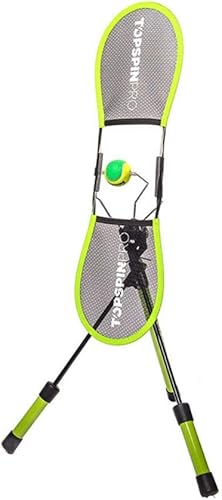 Top pick
TopspinPro Tennis Training Aid
Helps kids groove a low-to-high topspin swing at home.
View on Amazon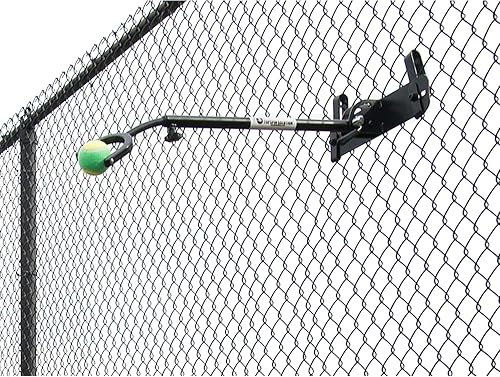
TopSpin Solution Tennis Training Aid
Attaches indoors or outdoors for low-to-high topspin swing practice.
View on Amazon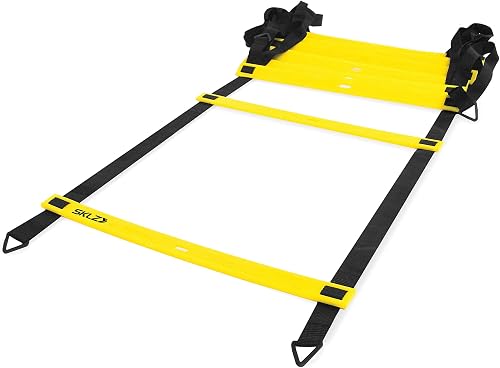
SKLZ Quick Ladder (15 ft)
Quick, light feet and rhythm, the small steps that set up every shot.
View on Amazon
ZEAYEA 9″ Agility Cones (30-pack)
Build a zig-zag or a “move and recover” fan in the yard.
View on Amazon
Disc / Saucer Cones with Carry Bag
Flat, so they’re safe to step on. Good for targets and court lines at home.
View on Amazon
SKLZ 6-inch Agility Hurdles (6-pack)
Knee lift and springy steps. They bend back if stepped on.
View on Amazon

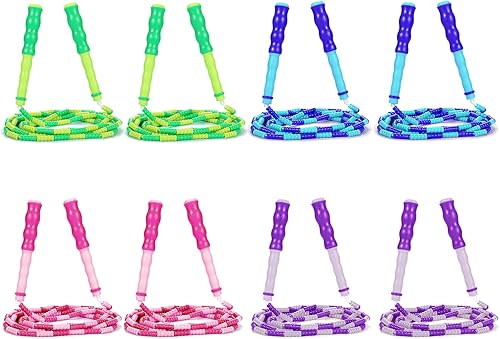
Supertrip Soft Beaded Kids’ Jump Rope
Timing and footwork. The soft beads don’t sting.
View on Amazon
Court basics
Court basics our players replace most: a fresh overgrip and a dampener.
